Skip to content
Black Friday Sale

In conversation_sanshoku_room

Interior Creator

Tokyo

/01

Choosing color is choosing who you are.

Masashi of Sanshoku Room works in spatial design while sharing a lifestyle all his own through his room. His space, which boldly brings in red, blue and yellow, reflects the influence of the Bauhaus, De Stijl and Rietveld, along with his own belief: “Don’t follow the crowd; trust your own sensibility.”

In this IN CONVERSATION, we asked him about how his current style came about, his approach to color, finding what makes you yourself, and what’s next for Sanshoku Room.

First, for readers who don’t know Sanshoku Room yet, could you briefly introduce yourself?

Nice to meet you, I’m Masashi (28). I work as a project manager at a spatial design company, and alongside that I share my lifestyle on Instagram through my own room.

Looking at your room, it has a very distinctive world of its own, a little different from the interiors we often see today. How did your current style come about?

It started with the MOMA Design Store, which I dropped into on a whim when I was a student. It stood out from every other gift or interior shop, and I remember being drawn to Mondrian’s red, blue and yellow and buying a notebook as a souvenir. Haha. What really accelerated it was the “Bauhaus 100th anniversary exhibition” held in Japan in 2019. With only a little knowledge, I learned that there was a school called the Bauhaus that gave birth to modern design, and art movements like De Stijl that tried new things, and I was struck by these people who resisted their era to break away from past traditions and order. From there, I was naturally drawn to the red, blue and yellow that Le Corbusier, Gerrit Thomas Rietveld and others brought into their architecture and furniture at the time, and I gradually started thinking, “One day I want to bring this to life in a rented one-person apartment in today’s Japan!”… and before I knew it, here I am.
Through experience, by breaking my values, playing with them and looking at them from different angles, I started to see what makes me “me.”

On Note, you wrote about the idea of “living colorfully, true to yourself, without being swayed by others.” Is your room one way of expressing that idea?

Yes. Many people get hung up on “safe is right” and create rooms without having a conversation with themselves, and I find a world full of those rooms a bit boring. So I value having a deep conversation with myself about what moves me, and I think that’s why I express myself with colorful rooms like mine.

You studied in Canada for six months. Did living abroad influence how you see interiors and design, or how you express yourself?

I think of “putting yourself in a new environment” as “shedding the parts of yourself you don’t need and becoming yourself,” and in that sense, looking back, it did have an influence. For the student I was then, studying English, jumping into the world of interiors and design, a world I didn’t really understand, took a certain amount of courage. Seen that way, studying abroad was really my “first experience of having my common sense broken” and “a time when I had room to enjoy the moment it broke.” Through that experience, by breaking my values, playing with them and looking at them from different angles, I think I started to see what makes me “me.”

On Note, you wrote that you hope what you share can be “a source of strength” for someone. What advice would you give to people who long for a colorful interior but can’t take the first step? And if someone were bringing color into a simple, neutral room for the first time, where would you recommend they start?

People often give “start by buying small accessories or decor” as the first piece of advice, but I don’t think that’s the first step. I think the first step is “having the courage to trust your own sensibility.” From there, try putting into words “why do I like these colors in the first place?” It might be a childhood memory of being surrounded by flowers, the moment you built your own castle with LEGO, the memory of how beautiful it was to scribble all over drawing paper with crayons, or someone’s work you saw at some point. I think that’s where your own reasons for liking things are. Once you understand that, you can go ahead and buy a large piece of furniture, or, if part of you still hesitates, buying small accessories or decor is effective. Then you’ll naturally keep reaching for more, and it will last.

What would you like to try next as Sanshoku Room, and what are your future goals?

There’s a limit to what I can do just by sharing things myself, so I’d like to create products or a brand that embody my current world and spread it more widely in society!
I value having a deep conversation with myself about what moves me, and I think that’s why I express myself with colorful rooms like mine.
Having the courage to trust your own sensibility.” From there, try putting into words “why do I like these colors in the first place?”

What is your favorite item at Bauhaus Japan?

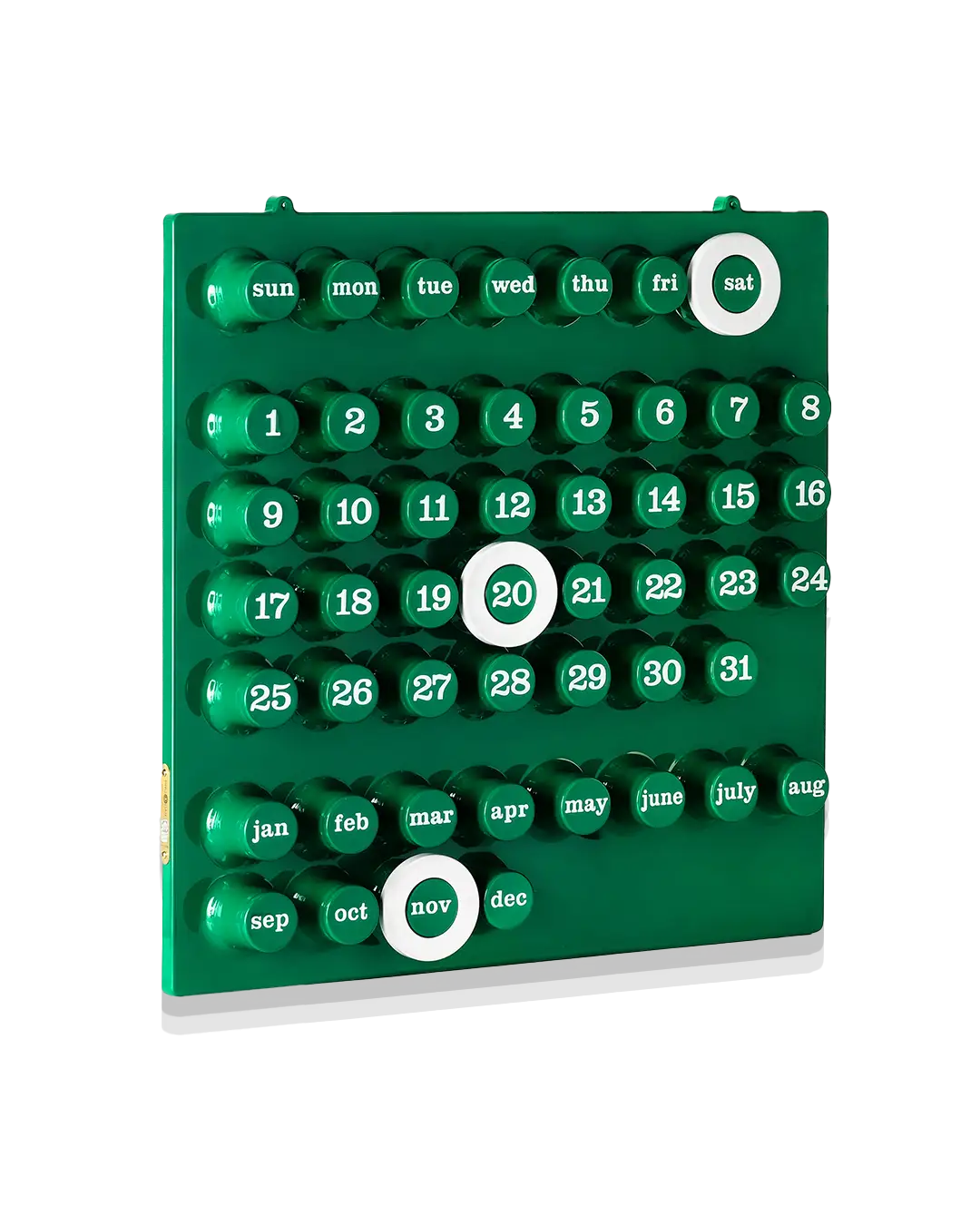
The Ring-A-Date Perpetual Calendar!

What is your favorite color?

A red leaning toward black (vermilion)

Please recommend one book.

岡本太郎著「自分の中に毒を持て」

Is there a design style or period you particularly like?

Contemporary modernism (1920s–60s)

Do you have a surprising hobby we wouldn’t guess from your Instagram?

I’ve actually loved Harry Potter since I was a child! I also played table tennis for many years, so I often watch matches.

Please tell us about a designer who has influenced you or who matters to you.

Gerrit Thomas Rietveld (Gerrit Thomas Rietveld). I especially love the Rietveld Schröder House.

Favourites

Ring-A-Date Perpetual Calendar (Genuine)

Regular price ¥34,800
Sale price Regular price
LIMITED

[Limited edition] Ring-A-Date Perpetual Calendar Café Mousse

Regular price ¥35,480
Sale price Regular price
new

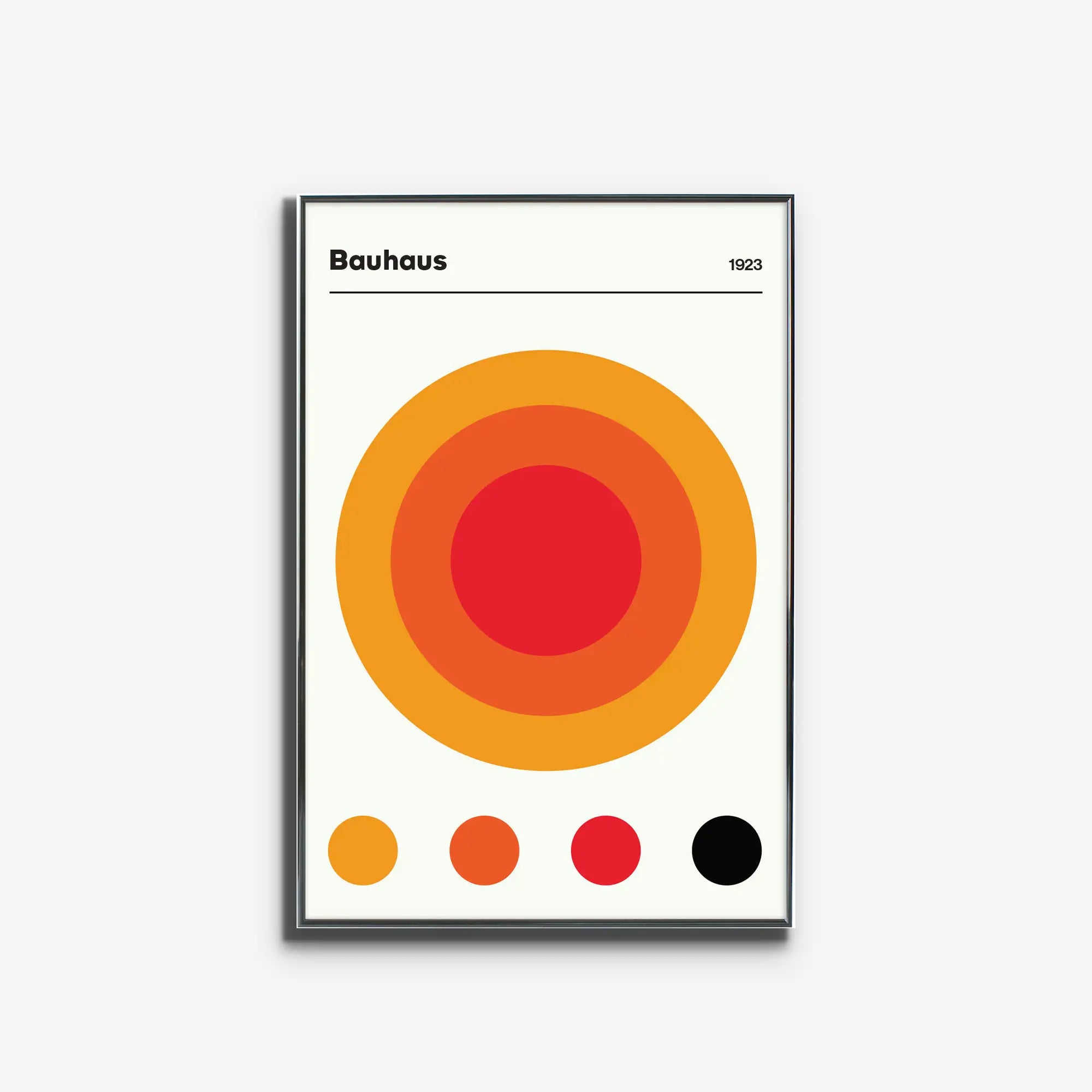
Bauhaus sonne

Regular price
Sale price From ¥3,690 Regular price ¥5,280